The LoCo Experience | EP292 Inspiring Hope for Teen Moms with Kodie Rosten & Kelsey Vandemark

 Apple Podcasts

 Spotify

 Castro

 RSS Feed
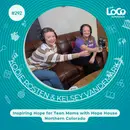
Inspiring Hope for Teen Moms with Kodie Rosten & Kelsey Vandemark of Hope House Northern Colorado
I met Kodie Rosten at a BBB event in Greeley, and before I knew what happened, I was inspired by her cause and invited her to join me on the podcast - and I’m so glad I did. She’s the Executive Director at Hope House Northern Colorado, and she brought her all-purpose Community Engagement Coordinator, Kelsey Vandemark, along for the experience!
Hope House Northern Colorado started in 2020 and was the first affiliate of Hope House, which began serving teen moms in Arvada in 2003. They’ve grown to serve several more communities in the meantime, and the NoCo affiliate has grown to a flagship example of community building.
We explore both Kodie’s and Kelsey’s journeys in this episode, which includes Kelsey recently leaving the board to join the team part-time, and Kodie’s journey of service and continual leadership growth. We also examine the direct care needs of clients and the growth experienced by Hope House - including their recent expansion into a much-larger facility - ribbon-cutting coming up on November 4th.
Amazing people doing great things for community is something we’ll always celebrate on The LoCo Experience, and so I invite you to join me in enjoying my conversation with Kodie Rosten and Kelsey Vandemark, from Hope House Northern Colorado.
0:00 I met Cody Rosten at a Better Business Bureau event in Greeley, and before I knew what happened, I was inspired by her cause and invited her to join me on the podcast. And I'm so glad I did. She's the executive director at Hope House Northern Colorado, and she brought her all-purpose community engagement coordinator, Kelsey Vandermark, along for the experience. Hope House Northern Colorado started in 2020 and was the first affiliate of Hope House, which began serving teen moms in Arvada in 2003. They've grown to serve several more communities in the meantime, and the NoCo affiliate has grown to a flagship example of community building. We explore both Cody's and Kelsey's journeys in this episode, which includes Kelsey recently leaving the board of directors to join the team part-time, and Cody's journey of service and continual leadership growth.
0:52 We also examined the direct care needs of clients and the growth experienced by Hope House, including their recent expansion into a much larger facility, ribbon cutting on November 4th. Amazing people doing great things for community is something we'll always celebrate on the Loco Experience Podcast. And so I invite you to join me in enjoying my conversation with Cody Rosten and Kelsey Vandermark. Welcome to the Loco Experience Podcast. On this show, you'll get to know business and community leaders from all around Northern Colorado and beyond. Our guests share their stories. And through it all, you'll be inspired and entertained. These conversations are real and raw, and no topics are off limits. So pop in a breath mint and get ready to meet our latest guest.
1:34 Welcome back to the Loco Experience. My guests today are Cody Rosten and Kelsey Vandermark. Thank you. I was going to ask how to pronounce that. If I was a good podcast host, I would have. That's okay. You did good. Just like it's spelled. Yeah. And they are the executive director? Yes, I'm the executive director. I'm not the founder. I started a year ago. Okay. Yeah. And the... Community engagement coordinator. Yeah. Yes. Of... Hope House, Northern Colorado. Yay. Yay. Let's set the stage. Okay. I would say a good portion of our listeners don't know what Hope House is. Okay. That sounds good. It's young, right?
2:15 It is. At least our kind of- Your chapter. Our chapter, yeah. We're an affiliate of Hope House Colorado in Arvada. And so we've been, we opened our doors in 2020. Okay. Wow. Actually. So six years old now. Congratulations. Yeah. And you have a new facility coming online soon. We do. Do you want to talk about that right away? We're in the middle of that process right now, actually. So we've been in our location for six years. It's in West Greeley. Okay. And we were literally busting out the seams. Doing what? Yeah. Yeah. So one of our, so we serve teen moms and help them reach self-sufficiency goals.
2:56 So it's self-sufficiency programming, full resource center to help them achieve their goals and build a brighter future for them and their children. And to do that, we do a lot of different programming. Yeah. It's more complicated than an even really complicated Lego project. It's very comprehensive. Yes. And most people think we are a house. The Hope House in Arvada does have a residential home for teen moms. Okay. For us right now, we just have a resource center, which part of that is direct assistance. So any mom in our program gets diapers, wipes, toothpaste, toothbrushes, hygiene products, whatever they need as far as essentials that can come through there.
3:40 And so that's partly why we are busting out the things. It's a generous community and there's a lot of demand. It's a very generous community. Like one of the churches gave us like three truckloads full of household items. Oh, wow. And that filled up like all of our shelling units in our little teeny room. And so between that and diapers, we were extending into other rooms. So we weren't able to, yeah, we weren't able to store everything. We were struggling and all that. Yeah. And then we do educational classes for our moms, like parenting classes, healthy relationships, financial literacy, renting 101, a lot of personal growth classes. Yeah. I'm pretty familiar with Project Self-Sufficiency here in Larimer County.
4:22 Yeah. Is there a similarity, a relationship there? Like, talk to me about... It's almost like they're kind of the next step after us. Okay. Because we serve moms who are between ages of 15 and 25. They had a baby before 20. And we are looking at everything as far as, like... You want to get them to stabilize as your biggest priority. It's really getting them from crisis mode to stabilization in all areas of self-sufficiency. Yeah. including parenting, since they are a parent now. And so, yes, we do work on education. We do GED testing on site and tutoring. But they're walking alongside through degree programs and stuff like that a lot of times. Yeah, sometimes we do get them.
5:03 A lot of our moms just enrolled in Ames Community College, so that's really neat. But really, they'll probably graduate from our program or age out and then be ready for more commitment with education, higher education, and project self-sufficiency. So we've definitely... referred moms to us and um our first graduate yes we just had our first graduate of hope hope house northern colorado graduate and she is that was a mouthful and she is now on to project self-sufficiency so that was cool to see can you are you willing to share well first off tell me what the community engagement manager does a little bit set the stage and we'll come back to you cody but oh yeah um and then tell me a little bit about that journey have you seen most of it unfold Yeah, so I've been with Hope House on the staff for about a year and a half now.
5:52 I was previously on the board, and I came off the board to join the staff. So as far as my position goes, it's a lot of things. Okay. Technically, it's more of the community outreach, getting out in the community, hosting booths or things. Trying to help spread the word. Spread the word, yes. Yes. But I also plan our events. I do all of our social media, all of the mark, pretty much the whole marketing piece. So, yeah. And why were you on the board? You were like a Smarty Pants marketing person or something? Well, I still am. Yeah, I still am. I'm a real whiz at Canva these days. But no, I was on the board.
6:33 I had previously served as president of the Women's Fund of Weld County. And they're basically a nonprofit that. grants money to other nonprofits. So that's how I learned about Hope House. And the founder, Colleen Emery, was just waiting for me to roll off that board so I could join Hope House. But yeah, I sat on the board for about a year and this position was open and they were just having a really hard time filling it. And I was like, I can do that too, in addition to the other things I do. Here we are. We'll dip into the other things because there must be a reason you're in demand on boards. Yes. She is in demand because she's great at her job.
7:14 Oh, stop. Yeah, yeah. Oh, stop. Thank you. And she's not here because of the high paycheck I am imagining. No. Most people aren't in nonprofit work. Most people aren't. Yeah. They do her heart, yes. I guess the, is it kind of a one-on-one? Do you guys have like a counselor or a person that each person's primary relationship is with, kind of? Yeah, we have two program staff, and they're the ones who are really mainly working with the moms directly, setting up the classes, and also just building that relationship. Relationship is one of our core values. There's encouragement there. Being a cheerleader, just sitting and listening in a nonjudgmental environment, and helping guide them through their goals and what we want to do next.
7:56 Looking at a terrible first draft of a resume, but still... Thank you. Exactly. Encouraging what could be done to make it look a little better. But honestly, all of us are a part of their lives because we are big on relationships. So when a mom walks in our doors with their kiddos or just a mom coming in, we all drop what we're doing and say hello and interact with them and see what's going on in their lives. So it's a really, it's a full, I mean, all of us are really a part of their lives. And do you have a lot of traffic coming through every day just for the resource side a little bit and then they learn more about your programmatic stuff or is it the other way around? Well, they do have to schedule to come and see us. So that's part of building some accountability and life skills.
8:36 Right, show up. You say you're going to show up. Yep, yep, yep. But with our new resource center, we're really hoping to expand more and just be a place that they can come and have a safe place to sit, study, and just hang out. Probably. So... further along toward the imagination of your logo and stuff implies that kind of place to be. Yes. Yes. And we have had some describe that Hope House is a second home to them. I mean, it feels safe. Their kids know it. They just, the kids run to the playroom and start playing. And they just love to come here. We had a mom who had a- It's kind of like a boys and girls club for young moms. Yeah. Yeah. Yeah. A little bit.
9:17 With skills building and all that. Right? Yeah. And we do a lot of events for them so they can get together and build connection. Oh, cool. And social connection. A little bit of peer pressure to do the hard things it takes to become a good parent and stuff is useful. Yeah. That's not someone you just meet off the street. Like, oh, you had a kid when you were 15? Great. Let's be friends. Right. Like, that's not something. It's an easy conversation starter. Yeah. But they really do meet each other and just build each other up. And also, I mean, we highlight super, we have a super shero every quarter and they are, you know, someone who's just really killing it and being a good example for other moms or got their GED or attending all the classes and learning so much.
10:01 And they really get to see that, wow, she can do it. I know I can do it. Just building each other up. Very cool. Talk to me about the new facility in contrast to what you've been up to. Is it twice as big? I would say definitely twice as big. I think it's definitely twice as big. It might even be a little bit more. Not three times as big, but it's going to be a huge change for us, for sure. Yeah, like on a typical class day, let's just say we usually do like a Wednesday evening class. We'd have four volunteers watching kiddos for about an hour and a half, plus 10 plus kiddos. We've had to start capping our classes.
10:41 So moms have not been able to sign up to come because we don't have enough in child care. And how many moms would be in a class, like a fully booked one? Probably 12. Okay. And that's high for us, but at one time. Right. Like, there's classes throughout the year. But we are growing and growing and growing. Right. And the moms are having second babies and keeping them in class with them. So our classroom itself was not big enough either. Well, and having multiple classrooms. Yeah. Do you have multiple places now where a smaller group and a bigger one kind of too? Yeah. We do. I mean, the playroom is going to be, I mean, I can't even, it's really big. It's massive. I can't even describe it.
11:22 Plus, we will have an outdoor space that they'll get to go outside and play on little play equipment. And that's something we've never had before. And also the room is so big that any activity we do, like we do an Easter event for the kids, a Mother's Day event to celebrate our moms. And we usually have to go off site and find somewhere to do those events because all of the moms coming together with their kids. It's just too many. It's too many. And we will be able to do all of that on site. So that's exciting. And the classroom is just bright and beautiful, natural light coming in. Yeah, we have windows. They're going to be so excited. The moms have not seen it yet.
12:02 Tell me about the process to going from there to here. Was that two years ago that it started becoming an idea? Or was it an opportunity that just kind of popped up? I think the former director was probably seeing it as well. This is probably going to be in need at some point because we are already starting to grow so much. But our board met in January of this year and really... planned out our strategic goals. And one of those was space. Some of the board members love to come and volunteer for child care too during classes. So they could see it themselves. They see it happening. We're bursting at the same age. We're squished in here. And the kids have nowhere to go. And our kids are growing.
12:43 If they were in a program five years ago... Right, they're not going to get any smaller. Their kids are older. None of them are getting smaller. And there's nowhere from there. There's becoming more of them, and they're all getting bigger. Yes. So we decided that in January, and Kelsey and I started looking at locations with a broker in February, March. Yep. And this is probably the third location we looked at, actually. Wow. And they hadn't even put it on the market. The broker was hired by them to come. Oh, wow. And he said, wait a second. He learned about you guys. Yeah. This is like exactly what Hope House is looking for. Yep. I showed up to the building to do a walkthrough, and I'm just like, oh, it's no big deal. I'll just go, you know, see what it's like. One of the staff was wearing a Hope House shirt.
13:23 She had volunteers for Hope House before. And I was like. oh whole circle wow i'm like okay i got goosebumps i'm like okay there's something and so it's been a long process but we we just moved our stuff in on tuesday and so all you know we're out of the other building oh wow close yeah close one chapter and we're opening another But we're not fully in there working yet. I saw ribbon cutting in November 4th. November 4th. Thank you for that invitation. My email's been unkempt a bit, but I saw it today. Mine too. And you guys just had a big gala. We did. Of some sort. What's your event called?
14:04 Remind me. We called it Building Generations Gala. That was just kind of the theme. It was your first event. Mine? Yeah, for you. It was actually my second. Okay. But the first one, I only worked here like a week. A week, yeah. Yeah. Gotcha, gotcha. So I kind of was thrown in and just did that. I've worked in nonprofits for so long that running a gala is normal to me. Okay, fair. So I wasn't too scared of it. But Kelsey made the process so easy and run so smoothly and very organized. And were you there last year too? Yeah. I was. Yes. So three years ago, I just attended. And so last year was the first one that I planned.
14:45 But yeah, we were going through the transition of Colleen, our founder, exiting and Cody coming in. So we had a lot going on. But so this year we weren't. But then this year we were moving. So, you know, it's never normal. But yeah, no, it was a great night. And we're so grateful for everyone who came. Was this Building Generations a new name from last year? We do try to kind of come up with a... Or is every year it's a little bit of a theme? Yes, every year there's kind of a different theme. Kind of a different theme. Like last year was Passing the Torch because we were passing the torch from one director to the next. Yeah, yeah, yeah. And that was really special. But this year we were really focusing on building two generations at a time. And supporting two generations.
15:26 So what are you doing for the kiddos other than child care? Are you reading to them and stuff besides? Well, naturally we do a lot of things with them, but we do ASQ developmental assessments. So it's ages and stages questionnaire. So our staff are doing those with the kids, referring to early intervention services or just modeling and showing moms what they can do to support development of children. And we just keep an eye on them, all of us. like a magnet to which best practices and resource knowledge sticks over time yeah and and you know you can just kind of almost naturally refer people to the right resource for their kid and recognize these challenges and oh you know what there's a speech pathologist that actually can really help her or whatever right yes Yes.
16:18 And our program staff are really very familiar, and myself and Kelsey too, just of what resources there are in the community and building those partnerships so that when a situation does arise and maybe we don't know how to navigate that with the mom, we know who to call. so that we can walk with the mom together to figure this out. So that could be, you know, some of our moms have had to go through their child being diagnosed with, with something pretty severe and just that, you know, usually the first call is to our program staff and how do I handle this? What the heck do I do now? What do I do? Yeah. Yeah. Yeah. That's so akin culturally to the Matthews house that I was part of for a a good good long and still am a supporter of the matthews yes but i was on the board for a while yes but a similar and a similar culture kind of thing uh and i imagine you probably also have that cultural expectation of you have to work also like i can't just fix you you need to fix you and your challenges and take them head on kind of and i'm here to walk beside you in the Yes, exactly.
17:22 A lot of empowering them that they can do this themselves. And you have a bright future. And sometimes no one has ever told them that before, that they can't do this. And we are those people that can really be that connector and making them see, wow, I am a mom, but I am so much more. And the road doesn't stop here for me. It's just the start of a new beginning. I'll do it. Yeah. Let's talk about this event. You said it was kind of building generations. You had in the silent auction, you had a local drink tank. We did. That was a really fun item. It's probably one of the most unique items we've ever had.
18:04 It was so cool. I love it. Yeah. Yeah, online before the event. It wasn't getting a lot of action. But as soon as people could see it and see all the fun things in it and read the description, it was on. You know, there was just bidding back and forth, back and forth. So I think, you know, it went for about $480 to support Hope House. And it was like $5.50 or something was the value inside there. Right around there. So that's pretty good. Yeah. Near retail value. Really good. Yeah, for sure. Yeah, we love that. I've gotten Sonicare toothbrushes for like $65 that were worth $250 before, right? Oh, my gosh. Yay. So, ready for me, but not so good for the nonprofit.
18:45 Yeah, yeah. Anyway, I digress. It's so fun to have different style auction items. Yeah. You know, you don't want the same thing every year. No, a good variety is fun, yeah. It was really fun. So thank you. Yeah. Sorry. I couldn't make it to the event. I would have loved to. I guess, is there like a next big dream? Like you've got this new center. Is it really, I guess, fully equipping that center? Is that what's next? That is definitely what's next in the, you know, really short term. We do like have a sponsor packet to kind of equip and build out certain spaces in our center because we're really coming from a very small place. We really don't have a lot. So we could have the local think tank spice rack for creativity or something like that.
19:29 Yes, exactly. I don't have a lot of money, so it's actually kind of small. That's okay. Well, we already have a sponsor to build out our mom's corners, what we're calling it. So like comfy couches, coffee tables, somewhere they can just hang out, and then we'll have a coffee bar. Yeah. lots of snacks and things that they can just grab. You know, we've had moms show up like two hours early because they don't have a ride. So they're there two hours before class. And, you know, that's a safe place for them, but they could just sit on the couch and watch TV. Hang out. So that's what we're hoping. And we want more of that, more community building and just more for them in our space. It's not just an office. That's probably the smallest part of what our building is.
20:11 Would you care to share kind of a little bit about Hope House, like the OG founding? Is it just the one in Arvada and then you all, or is it nationwide? No, it's actually... Or set the stage a little bit more there? Yeah, it's actually... I don't know if you want to answer. Yeah, so Hope House Arvada is 23 years old. Is that right? Yeah. And so, yeah, they started with a residential facility. Okay. And then the house was donated to them, and then the church donated the land for it. So that was really cool. And their operation down there is really quite impressive. They have a massive resource center. They have the house, and then they just opened an early childhood learning center. Oh, wow. Yeah. Yeah. And we were their first affiliate, but since then they have gone nationwide.
20:55 Oh, wow. So they have one in Canyon City, and then they're opening Rally just opened. Rally, yep. And then there's Hope House Florida. Florida, and then it sounds like maybe a Colorado Springs is an option coming up soon. And I think there were some rumblings about maybe like Chicago or a suburb of Chicago. So, yeah, it's really expanding. And when was Northern Colorado? 2020. Oh, yeah. So six years ago. Wow. We were their first one. And they're like, this isn't so hard. Yeah. They're like, we got this. Or other people were like, hey, we should have one of these here, too. Well, there is such a huge need for it. Right. It's really an unmet need. We're truly one of the only, I mean, in Northern Colorado, we're the only nonprofit that exists kind of focused specifically for this reason.
21:37 Well, and it is... It is one of the biggest challenges, right? And even people not having relationships today, in part, it's avoidance of becoming that single mom in some ways, right? So even the normal lubrication of society and people falling in love and making babies, which kind of... makes the world go round, is kind of when people struggle through that kind of a season, it's an interrupter for more than just that particular person in some weird ways. Yeah. I hadn't really reflected on that, really. Maybe that's going over the top. No. I guess what I think I'd like to do, this is going to be, we're kind of a life and business journey for both of you.
22:21 So before we jump in the time machine and go all the way back to first grade, we're going to just focus in on the journey to Hope House. Like first get introduced, what drew you, kind of what was your journey, for example, into the director's role. And then same back to you, Kelsey. Okay, sounds good. Okay. For me, I've been in nonprofits for 19 years now. Okay. And I really started out with working with foster homes and child placement agencies. Oh, yeah. So kind of supervising and helping to license foster homes through private agencies. Yeah.
23:01 And that's really like I had not planned to be doing that. Right. But with a psychology, bachelor's in psychology, that's kind of what. Unless you want to become a counselor or something. Yeah, exactly. And that's originally what I was going to do was I wanted to be either a child therapist or marriage and family therapy. Family is very important. Um, just as I started working in child welfare and working with at risk youth, that's, um, where my heart started to grow. And I was like, okay, this is where I'm supposed to be. Here's the actually vulnerable model. This is what we're going to do, yes. Yeah. Well, there's so much leverage. If you can change somebody's life in that they're still pliable enough at that 13, 14, 15, 16, if somebody gets baked into trouble until they're 30, they're probably just trouble.
23:49 Yeah. Yeah. For a long time. Yeah. Yeah. Anyway. Yeah, it was eye-opening for me to see because I really don't come from that kind of a background. Sure. Which I'm very, you know, thankful to my family for that. Totally. But it was eye-opening for me to see that everyone comes from some, you know, very different backgrounds. Yeah. And there's some trauma in some kids' lives that I just had no idea people were going through that, to be honest. Mm-hmm. I was very young and green and like, oh, wow. Okay. But I just also just wanted to be there. Okay. Yeah. So then, sorry, continue on. Well, that's the, you're taking me all the way back. I just want to come to Hope House.
24:30 Okay. Well, there we go. We'll come back to that. Yeah. Working through nonprofit, I really just kind of started to learn about myself and how I really just love to lead teams, be an empathetic leader. I don't want to do anything or have a staff. You don't just love the power? No, I don't. I love it. But you know, I've grown in nonprofit and done so many different things that I would not ask a staff to do something that I wouldn't do myself. So I just kind of found something in me that I felt like I could really be a powerful leader. And I didn't realize that when I was younger.
25:10 So I looked for opportunities to develop that. And I started going to leadership kind of classes and just asking in my previous work, like, what is there out there that I could do? Like professional development. And then Ames Community College started their nonprofit leadership academy. And I was jumped at that chance. So just because I was looking for maybe the next step of executive director leadership. You were in a stable organization that didn't need a next executive director for a while. Yeah, exactly. So I was like, let's build. Build my skill set? Yeah, build a skill set. And I really was not just looking all the time for something. I wanted it to be something I was passionate about that I was excited about.
25:53 And I had a friend who called me and said, hey, someone's looking for an executive director. Did you see this? And you weren't familiar before? No, not actually. I really wasn't. I had heard of it and I had actually seen Colleen, the former director, around, but I didn't really know her that well. So I really wasn't familiar, actually. She just sent me the job description and I just fell in love with it immediately. Yeah. I felt like I was meant to do. Yeah. So that's where I was like, I was nervous about being an executive director. I hadn't done it before. But I had done some coaching and things like that. And I'm like, okay, I got to put myself out there. I got to stretch. I think I can do this. And, you know, I have a good community around me.
26:35 Yeah, I like it. Let's try it. I like it. Here you are. Here I am. You talked your way on to the Loco Experience podcast the first time we met. I mean. And so that's pretty executive directory. Persuasive, I guess so. I'm working on it. Or perhaps I invited you right away after I found out how cool you were. I don't really recall all the details. We're just happy to be here. That's right. Kelsey, I'm going to bounce the same to you. First exposure and then the stronger magnet. Yeah, so my background is in real estate, so that's my... You still do that? I do. To make more of your money than you do here? I mean, it's expensive to live here, so you got to do something. So when I... We moved to Colorado in 2018.
27:19 So at the time I just got licensed and I needed to get involved in the community. And so my friend was sitting on the Women's Fund of Weld County Board and she said, I think you need to get involved in nonprofits. And honestly, before then, I didn't really I knew what a nonprofit was, but I had never really had any history with them. But that organization is really cool because they do grant to so many nonprofits. You get to learn about all of them. And through their grant process, um, you really, yeah, get to know a lot about all the amazing organizations that we have in Northern Colorado. So was Emily Kincaid on that board too? She was. That's what I thought. Yeah. And she was also my client and we miss Emily.
28:00 So yeah. I've got her right there. Oh yeah. There she is. Oh, so yes, I served with her on the women's fund. Um, So that was my entry into nonprofits. And so just learning about, yeah, all the different organizations. And then I just, I really feel passionately that. You let this fund fund all these causes. What do they all do? Yes, exactly. And executive directors would come and present our board meetings and all of the things. So I got a really good grasp on so many amazing organizations through that. And I just think. It just made me realize that if you expect a community to support you, you need to support your community and do something that's bigger than you.
28:41 So that's how I met Hope House. I met Colleen through that granting process and met with her several times and just really learned more about the organization. So I always knew when I was ready to roll off the women's fund that – the hope house would be my next landing spot. Um, and because of the relationship there, especially the cause, the purpose of the cause. Yeah. And I just, I mean, it's just so empowered. Like everyone needs some, a good role model to empower them. And, um, these girls deserve the world. So it's just really cool to be involved in and getting them to that next level and having those relationships. And that was how long ago when you joined the board.
29:22 The board was probably, geez, so we're in 2026. I joined staff April of 2025. I was on the board probably through 2024 and early 2025. Okay. So, yeah. And was there an opening, or did you use your power on the board to create a new position for yourself? There was an opening, and it was open, open, open for a few months. And finally, in one board meeting, they were talking again. It's like, we haven't had any applicants yet. And at the time, it was kind of presented as like, oh, you're going to do some social media and some marketing. Just intro. Just fill it in for a little bit. Yeah. And I'm like, oh, that's not bad. Like, I can handle that. And it's kind of spiraled. Yeah.
30:03 But in a good way. All good things. Well, and the cool thing about... Your business in real estate and even my business in local think tank a little bit is like there's value in just seeing and being seen. Yes. If you're serving, if you're even watching kids, some of those people will buy houses from you someday. Totally. And that's great if they do and if they don't, that's okay. Yeah, for sure. But the flexibility is there. Right. And our market right now is obviously... You've got more free time than you've necessarily... More free time than I have in the past. But no, I mean, I wouldn't have it any other way. That's really cool. Yeah, I'm grateful to be here. Awesome. Well, I'm glad you're here as well. Thank you.
30:43 Cody, what would you like to add to... So were you part of like the... No, you were already on the staff before her. Well, it was an interesting thing, really, because I was on the board while we were hiring her, and I was on the hiring committee... Interesting. And I came off the board right in that time frame, but the board left me on the hiring committee. So I basically kind of got to hire my own new boss. It was a unique little situation we had going on there. Sounds like it. I mean, I think that's valuable, though, for your staff to be able to be a part of that decision. Yeah, for sure. I mean, having a new leadership.
31:24 For sure. I'm sure most staff would like to have I'm sure they would. Yeah, so that was an interesting time. So yeah, I joined the staff kind of right as we were hiring Cody. So yeah. And then your other two team members are part-timers and they're programmer, program director basically? Yeah, they do program manager and program coordinator. Case management basically. Yeah, case management and relationship with the moms. Yeah, every mom's journey is different, so they're really just there to map that out. And if your programs would expand, your space is expanding, your programs would expand, is there just more program manager kind of folks or are there other talent positions on the team that you would make open as you grow?
32:10 Well, I would say, you know, I'd love to be, to grow enough that we need like a full-time development staff because we're like... Right now, the two of you are winning the best you can. We are developing. Yes, we are doing. The development department is us. That is us. And like you said, you know, making more connections and getting out there and being known in the community is huge and working together with your community. And so... with limited time for both of us, really. So we try to be everywhere we can. More fundraising means you can kind of then hire more program people. Yeah, we don't receive any federal funding. I was going to say, what is your funding mix? And do participants pay to be involved?
32:53 All free resources. Have you ever thought about charging just a little bit? No. No. Honestly, especially with what's going on in the world right now, our moms are barely making it sometimes as it is. I see what you're saying. Sometimes you have a problem with people showing up if it's free. We do have some kind of incentives and things like that. We do. So we have a purpose for the program, and we do have some kind of guidelines to re-engage them. And if your attendance doesn't go up, then no free diapers for you. Yeah, so diapers and wipes is one thing that we'll always give. We don't do that with, but yes. But there are other things that they may not participate in.
33:34 Let me tweet in the deal with some candy. Yeah, if they're not fully engaged, there are... Measures we implement at times. Use carrots, not sticks is the point. Yes. We don't allow them to just come to all of the fun mommy and be event get-togethers. Right, and never do a class. And never participate. Yeah, yeah. And we do bigger direct assistance, like rent assistance and utilities and things like that. So if they are following their program. How do you fund all of that? Like, can we get back to that question? Oh, yeah. Like, the mix is it? I'm sure it's donations. There's got to be some grant funds in there, too. We do foundational grants. Okay. For sure. And then individual donations are a big part of it.
34:17 We do have Bedrock Builders, which are monthly donors. So, you know, they're very consistent in supporting us. And then sponsorships and fundraising events. So that would be kind of our next, those kind of three buckets. Is there any faith affiliation or orientation associated with Hope House? Yes, there is. I mean, one of our core values is to be Christ-centered. And really what that looks like for us is that relationship piece of, you know, really loving our moms and children like God would. And part of our mission statement is to make sure they know that they're important in God's sight.
34:57 And really that's how we treat them and operate. Yeah, well, that's a very encouraging notion, especially when sometimes people haven't. Yeah. Felt very important. Yeah. As part of, you know, why they found this. Yes. But we don't require anyone to be of a certain religion or practice in any way. Well, what I was thinking is you guys are probably familiar with like realities for children. And there's always business members of it or whatever. Yeah. You guys could have church members of Hope House. Yeah. And every church could be $500 a month sponsor and be a contributing foundation builder for Hope House. Yeah. You know, and, you know, $500 a month for a church isn't that much money. Right. Yeah. You know, and to be like, hey, we give to Hope House every month. It's like our church gives to Alpha Center directly.
35:39 Okay. As an organization as well as encouraging our members to. And we do have some churches that do support us very well. Hopefully I'm not misquoting that. I think they do. I don't know. I'm not part of the finance committee. But we do. But that could be a kind of cool thing to build a network of churches. And then you could actually potentially activate a lot of volunteers through that network, too, as you grow. Yeah, we have some great partnerships. Generations has always been super supportive of us. Timberline was at our gala. They sponsored our gala. It's a great little friendly competition. I know. Like, hey, if we bring these girls to Christ, we're going to send them somewhere. You want them in your membership or, you know, you're going to lock in.
36:21 Right. It's a little bit, uh, trite, but yeah, we, we do like a Bible study every year. It's not a requirement, but it just seems like the, the, like having that durable funding. Cause when your foundation funded, it's like, Hey, thanks for funding us last year and the year before that. Yeah. I, I know. Don't make me fire somebody if you don't give me more money this year. It's never guaranteed. That's the thing. So it can be hard from that standpoint. We hope we're going to get it, and we've gotten it in the past, but that doesn't always happen. You're doing a good job, and you're checking your outcomes really good. I'm sure that's a big part of the – especially if you're grant-funded with a reliance on grant funding.
37:05 It's like, here's where they were when they came in. here's where they are a year later. And I think, too, just with how many federal cuts have gone on, there's so many organizations that are now reaching out into more of those types of grants that we typically receive. So there's just a lot more competition, too. And like we've said, there's so many amazing nonprofits in northern Colorado. Right, a lot of choices. There's a lot of choices. A lot of good choices. And a lot of people knocking on all these businesses' doors constantly, you know, wanting money. So we get it. But yeah, it can be hard for sure. One of our goals is to really build on relationships with individuals and businesses and just people in our community to just know more about Hope House.
37:51 And that's one of our goals is just really, really get out there and meet people and let people know what we're doing here. And we do serve Larimer and Weld County. You do? Okay. Yeah. All of northern Colorado. Really, anyone, if they can get to our center, we'll serve. them. So is that part of the eventual growth plan would be a, like a Lannister County center somewhere? I-25, 34 or something like that would be okay. We would love some sort of site over here. Yes. But yeah. If anybody's got an extra property, you know, big enough for big racks of diapers and a visible good parking. Transportation is one of the biggest struggles that these girls face. So, um, we found that because our resource center is in Greeley, most of our moms are in Greeley because they, that's who can get to us.
38:36 But, um, so yeah, we realized that that's definitely a need. We would love to serve more moms in Larimer County, but if they can't get to the center, then that's kind of an issue. So, um, yeah, we partner with a company called Driven to Donate and people can donate their vehicles. So like if you have a car that's kind of just hanging out and you're done with it, um, you can go through them to donate the car to us. And if it's just not in super great running condition, they kind of evaluate it. And if it's just not something that's going to work, they auction it for us and just give us the proceeds. So that's very cool. Yeah. Yeah. Let's go ahead. Oh, I was just going to say, yeah, that is definitely one of our goals is to outreach more into Larimer County because we can serve Larimer County.
39:19 And then another future goal would be to help with housing in some way. That is the model that we follow through Hope House Colorado. And so if it's maybe not a house yet, we're just not able to get there yet. But that could definitely be... a hope for the future. And even, you know, baby steps, like helping more with rent and being able to support in that way or helping pay for child care and things like that because of CCAP freezes and things like that. So there's more we can do. There's more we want to do in the future. And are you doing stuff with addiction and stuff like that too? Well, we do. We contract with therapists. So we do. Yeah.
39:59 We'll pay for therapy if they don't have insurance or no-show appointments and things like that. But we definitely want to connect them with a therapist. And if it's someone who has some sort of addiction, then they have specific counselors they'll match them up with. But we haven't seen – well – You might still resource them with wipes and diapers and whatever you can, but they're not likely to engage in your education program if they're inactivation. Until they're ready for that. Yes. So we really meet them where they're at, what kind of situation they're in. You know, if that's here, you need to connect with this organization. Come back in two months or six months when you're ready. Yes. Yeah, they really do have to be in a place to be ready to move forward with their being self-sufficient in a lot of areas.
40:43 Yeah. Yeah. Well, we're going to take a quick time machine trip. Oh, wait. Because we, like I said, all the way to first grade. Oh, man. I'll have to remember back. I know. Kelsey, let's start with you. Oh, geez. Okay. Where were you in first grade? In first grade, I was in Idaho. Okay. What part of Idaho? The Sun Valley area. Okay. So I was there until fourth grade, and then we moved to Arizona. And what was your family up to? My family was up to – my dad was a painting contractor. Okay. So he painted all the big, giant, beautiful homes. Cool. And we did not live in one of those homes, by the way.
41:23 Right. And my mom managed an apartment complex at the time. Okay. But she later went back into real estate. She'd been around real estate forever. Yeah. Her background was in real estate when we moved back to Idaho. or to Arizona she got her license again. And then siblings? Siblings. I'm the only product of my parents. So I have a lot of siblings, but they're all much older than me. And my parents had me kind of late in life. They were 40 when they had me. So I kind of grew up as an only child. I had one brother in the house for a little while, but then he graduated and moved on. Interesting. So you were like at the end of life kind of an only child experience. An accident, if you will. Right, right.
42:04 Well, I know, you know, a happy accident. 40s and 50s parents that just kind of gave up on actually making sure their kid minded things. Yeah, yeah, for sure. Free range. Yeah, free range. Yeah, free range. So, so yeah, that's where I was at the time. All right. Idaho, then Arizona. Yeah. And Cody. Yes. So I was. Different generation. It is funny to hear some of those things because I relate to them. But I grew up, was born and raised in Durango, Colorado. Oh, okay. So that's, and my husband is too. So we all come from that area. Oh, from that little town of Durango. At that time it was a littler town. Yes, it's definitely grown a lot. But yeah, both of our parents like grew up. Well, my parents definitely grew up there.
42:45 So multi-generational Durango families. Yeah. Ooh, sorry. It's okay. So... But yeah, my dad was a preacher and also a carpenter, you know, privately owned carpentry. And was he like a preacher for a church? They paid him to do it and stuff? He wasn't in the street corners and stuff? Sort of. They barely paid him, which is why he was a carpenter. I don't know if he was paid, actually. I was too young to ask those questions, I think. But there was like three of them that rotated. So a small church and just, yeah. A stipend probably, but mostly he fed the family with carpentry. Yes, yes, exactly. And my mom, I was also a very late baby, I guess.
43:26 Not as late, but I think I might have been an accident, but they won't tell me that. But my sisters are nine and ten years older than me, so I have two sisters. And so I was kind of an only child, too, for a while. Yeah, interesting. Yeah. But yeah, so anyway, my mom, you know, stayed at home for a little bit. And then I once I was kind of in elementary school, she definitely went back to work. And yeah, what was what was call it middle school Durango like for you? And what were you like? Oh, gosh. I was very, I was much more reserved and quiet. I mean, I still have that in me, but through my jobs and experience, I think I've grown out of that some.
44:07 But definitely quiet. So you were a wallflower a little bit, kind of. Yeah, pretty sheltered. Listening, watching. Yes. Yeah, kind of sheltered from what their world is really like, I think. Which I think my parents are trying to protect me, of course. Was your dad's church like a very conservative kind of congregation kind of thing, or just in general? would say we were it was just kind of a small little church and just to kind of just be and just play and you know make friends in the church but yeah I don't know I think um they didn't uh we didn't have a lot of friends or anything that had um you know issues growing up and so I guess I just never really family a little bit yeah but I was in band in middle school and high school so I was kind of a band which instrument french horn Ooh, one of those fancy ones.
44:59 Well, we're learning more every day. So how about at the next gala, you bust that French horn out? No, I don't have to really practice again. I do have one. It's in my basement. Okay, well, you have a year. Figure it out. Your husband's going to love this project. Oh, my gosh. No, I'll rope him in because he played trumpet. Oh, good. Yeah, let's have a little band. Yeah, a little three-piece. You could do it for Casino Night. Yeah, I guess. Or not the Kiwanis Casino Night thing? Oh, no, we do one as well. We started last year. It was our first annual Casino Night. It was kind of our spring event, but we're doing February 11th next year. Oh, fun. Yeah. Do like a Valentine's Day.
45:39 Valentine's Day. Yeah. It's fun. Yeah, I did see the Kiwanis one, though. So yeah, band geek. I know. There's only so many ideas. There is. I know. We try to be unique, but then there wasn't a lot of people doing it. And then now. Yeah, they're back. They're back. Well, I saw a side the other day. It was kind of like be authentic. If you try to be unique, you're trying to do the same thing as everybody else, basically. Sorry. Yeah. Yeah. All right, Kelsey. Middle school. Middle school. Middle school. But moved to Arizona. Yep. So I was in Arizona by that time. And I was a cheerleader.
46:20 So from middle school all through high school. That was your primary. Yeah. Well, it was always like, you know, as parents do, they're like, you have to do something. Right. It's like I'm not athletic in the least. No? So I did not need to be like. trying to play soccer or anything like that. That would have been embarrassing. So I just kind of. And they didn't put you up on the top of the pyramid. No, I was the base of the, yeah, the base. Uh-huh. Lifting the little girls. So. So you've always been a bigger girl? Just kidding. Yeah. Yeah, well, you know, these days there's a lot to help us with those things. So that's helpful. But yeah, so that was it, basically, in Middlesbrough.
47:04 I can't believe I said that. I know. That was really... What's the safe word? Sorry. Octopus? Octopus, but we're going to leave that. We're going to keep that. You look great, Kelsey. Thanks, Cody. You do. You're very attractive. Thanks. So, and we're in Arizona, by the way. We were in the mountains. So we were in Pinetop Lakeside. Okay, so this is rural environment. Yeah, it was a pretty small town. It was very touristy. All the people from, like, the Valley, Phoenix area. So you've been around beautiful people all your life, kind of. I've lived in a lot of pretty places, except for the stint in North Dakota. Oh, I'm from North Dakota. You are? Yes. From where? There's not that many pretty people like me from up there. They chase us out. Where are you from? Jamestown.
47:44 Okay. North of Jamestown is where I grew up. I graduated with a class of five. Okay. Yeah, that's, yeah, tiny. Yeah, one of my good friends, his whole family is from Jamestown. And you moved to North Dakota? So we spent, we started in Grand Forks. My husband worked at American Crystal Sugar in East Grand Forks. And that's when the whole, they went on strike and the whole thing. And he was told, oh, I, my brother was like, I can get you a job in North Dakota, but it's only for three months, but you'll make this amount of money. And it was like a very large amount of money. I can suck it up. Yeah. Well, that three months turned into four years. And then he's like, well, I want to try the oil field. So then we moved to Dickinson. Oh, wow. And so he's been in oil ever since. Well, it's back up to when we met him.
48:25 Oh, in high school. Okay. In Arizona too? Yep. Okay. Yep. His whole family's from Arizona. Does this gentleman have a name? Uh, his name is Tim. Hi, Tim. Hi, Tim. You'll probably listen to this. Yeah, he probably will. Um, so, so yeah, we, um, we've moved a lot and we will not be moving anymore. So. So that landed you back in Northern Colorado. Yeah. I mean. I think you mentioned. Yep. At the time it was like, he wanted to stay in oil. So it was like, where can we go? Kind of thing. He was tired. That's not such a shitty place to live. Yeah, exactly. Took the, took the words right out of my mouth. He was tired of freezing to death in the winter. Right. And as we all were. So here we are. So. Yeah. Pretty cool. Yeah. And I guess while we're here talking about family, do you have some littles and stuff, too, you've been dragging around?
49:08 No, but I just have one little crusty white dog. Okay. She's been drug all over the place. There's still time. Yeah, and it can be. It can be. And have you been in real estate for more than this amount of time? Since 2018. Okay, when you got here, you kind of started in real estate. Yeah, in North Dakota, I managed a few clothing boutiques and I was their buyer. That's fun. So when we moved here... The intention actually was to open a store. Oh. But my business partner was very set on opening said store in Old Town, Fort Collins. And the rent is extremely expensive. Yeah, you're like, I'm not going to sign that lease. Yeah. So we went, we spent about eight months trying to get that figured out and it was, Became pretty clear that it just wasn't meant to be.
49:51 And my backup plan was, all right, I'll get my license. So that's what I did. But I mean, all things considered, we probably would have opened the fall before COVID. So we wouldn't have made it. It would have been terrible. Yeah, it would have been horrible. So everything happens for a reason. Yeah, if things would have changed differently, I would have started my restaurant back in the middle of the time. Oh, geez. Yeah. What kind of food? It was kind of a locally sourced international fusion was kind of the theme. Fun. Everybody come here because all food and all places are food. Are you a chef? You know, not trained, but I make good food sometimes. So you can whip something up? Okay. Yeah, yeah. I would say so. Your high school, like, growing up seasons.
50:32 Yeah. You left when you were a shy middle schooler. Right. Yeah. In Durango, a multi-generational craftsman and preacher family. Yeah, I think I was pretty reserved probably my whole life. whole educational time frame. I also I don't know just kind of kept to myself probably a lot and so I don't think I realized what my potential was until I Kind of moved away from my family, maybe. Yeah, yeah, yeah. Like, just kind of being independent. And, you know, I did get married young as well. Also high school, sweetheart. We met in high school. Dang.
51:12 We didn't start dating until after I graduated, but he was still in school. A little bit. Oh, damn. Stand a little bit older, but not by much. So anyway. Can we talk about that first, were you friends for a long time? And then you were like, hey, you know. No, we were. I always knew he was there, but also in band. I knew he was there. No, I just. trumpet players so you can't trust those guys usually i thought he was a bad kid and so i didn't like yeah i didn't like those like do bring that boy around yeah like pretty much that's what my parents told me about oh yes yeah i did grow up a family of hunters so i was kind of a bit of a wild kid of sorts and my wife was kind of in a born a grim christian family at that time and like they didn't get to watch the simpsons and stuff oh i didn't either I'm going to go down the trailhead and shoot some pool.
52:12 Jill, you want to come? Yes. Yes, I do. Yes, I do. Oh, no, that's fine. I didn't realize who he really was. I think he just, I'll talk, you know. So, his family. Well, because you're the cute girls if you're a bad boy. Right, exactly. Otherwise, you just loan me. He was always shooting for the, you know, really, really. So, he was pretending he was a bad boy just to get the cute girls. Yeah. He really tried, but it wasn't successful until he met me. There you go. I mean, he really saw me. So, yeah, I actually kind of talked him into it through my friend to ask me to prom. Okay. So you're like, P.S. Yeah. Make this comment. Well, we were marching together in band. And I was like, oh, maybe he's actually kind of cool.
52:55 So, yeah, I was like, you should tell him to ask me out. Then it was like love after three dates kind of thing. For him, yes. It took me maybe a little bit longer. But, yeah. Yes. We love that. Yeah, no. It was great. But, yeah, I think that my family were probably like, oh, wow. Like, you're too young to have, like, a serious relationship. He actually followed me to college. I went to Ozark Christian College in Missouri. Okay. Right after high school. And he actually graduated a half a year early and then followed and went to school there too. Yeah, yeah. And so my parents are probably freaking out because we were getting a little more serious than they would have liked.
53:38 And moving away from their direct inspection. Exactly. So we did move back. The school was just not quite for us, but I loved my experience there. And so we just moved back and... um just kept dating and then he asked me to marry me so we got married i was 20. yeah very cool and then you just kind of started a non-profit right you know after college kind of no actually throughout college i worked at subway oh that's right a sandwich artist i was a it was a lead a lead sandwich artist for like four years But and then went to college at Fort Lewis College in Durango and graduated from there with psychology.
54:18 And how did you find your way back up, back to up to Northern Colorado? Yeah, it wasn't expected really. But my husband's family, they had their grandparents lived in Evans next to Greeley. And his grandpa actually got really sick from West Nile. Oh, and they had to move into a facility in Pueblo and they had a lot of family there. So his wife went with him. Grandma went with him. And they didn't have time or space to sell their house. So I had just graduated college and we're like, well, let's just go pay the rent for them, pay the mortgage and just move up here. So it was kind of abrupt and scary that we just moved away from everything we knew. My husband actually was born in Greeley.
54:59 Okay. He was there for a year and then moved to Durango with his family. And that's how he came back. So it was like full circle. We went back to Greeley. And Circa Me, what year was this? We came up here in 20... Wow, it's been a while. It's been a while. Let's see. No, no. 2003? Okay, so really almost... It's been a while now. Back when I was around. Yeah. Yeah. So, yeah, what a neat... Do you ever wonder, like, what if we just stuck around a Durango area? We were kind of townies and stuff. Yeah, I mean, it's a hard place to live. It's really expensive. Right. I think both of our parents, like, we didn't grow up with a lot, but I think since they were just so established and had a home before, things got so easy.
55:45 Before it got really close. Yeah, that they're fine, but to move back there or just to be there, it's really expensive. Being here, it's almost easier to get established even than there. It is. There's a lot more opportunities up here as far as jobs. So many of them have different jobs and stuff. Yeah, that's the biggest thing is there's just like you have to almost already be rich to move to a place like that. Yeah, and work multiple, multiple jobs. Right. Well, that's not me, but yeah. I know. Yeah, it's hard. Those little towns are hard. What a neat thing. So you largely came up here like sight unseen. Had you been up to northern Colorado much at all before that? Only one time to visit his grandparents when they were there. Yeah, and so I knew nothing. I thought when I got here, like 23rd Avenue and Greeley was like it.
56:26 And I'm like, there's like nothing here. Like, what is this? I don't understand this place. But no, I have actually grown to love northern Colorado. We live in Windsor now. Okay. And we have two little ones, a nine-year-old girl and a three-year-old boy. And so it's been a great community to grow up in for them. And I love living in like a neighborhood. Well, for you guys, your kids when you moved here almost. Yes, pretty much. So we've grown together and it's been a really wonderful journey. And did your, oh wait, your husband's still in oil? Well, he's technically now he's in natural gas. Oil adjacent. Oil adjacent. Yes. This episode is sponsored by Loco Think Tank.
57:07 Loco Think Tank provides peer collaboration for business owners. We build smart, safe places to help business leaders navigate every stage of the business journey. And we love what we do and who we do it with. Our model features gift-back-minded business veterans in the role of LOCO facilitators, and we're always looking for abundance-minded individuals to add to our membership, facilitator team, LOCO community, or to feature on this podcast. Listeners of this podcast who go on to become members of LOCO Think Tank get their sixth month of membership for free. Just mention the LOCO Experience podcast on your application. To learn more, visit our website at locothinktank.com. That's L-O-C-O thinktank.com.
57:47 We are going to jump into our purpose-driven segment here. Both of you seem to be fairly purpose-driven individuals. I would say so. I would say so. And we'd like to explore that just a little bit. Thank you to Purpose Driven Wealth of Thriven for sponsoring our purpose-driven questions segment. At Purpose Driven Wealth, they believe financial clarity leads to a life of contentment and purpose. Their mission is to help guide clients using a values-driven, stewardship-based approach focused on provision, contentment, and enjoyment. With more than a century of experience, Thriven helps individuals and families navigate life and business transitions and prepare for the future while creating space to live generously and give back in meaningful ways.
58:33 To learn more about purpose-driven wealth, please call 970-330-7411 for a complimentary initial consultation. And now, on to the questions. Okay. Um, I guess let's... You didn't come from a family of great means or anything, but you kind of chose this nonprofit field, pursuit. You know, what is – why were you so purpose-focused? Was it an option for you? Or like – yeah, talk to me about – I think – I wasn't sure what I wanted to do with my life.
59:14 And when I went, I was in a psychology class in high school. And that's just like, I just loved everything about it. Oh, the light bulb went on. Yeah, big light bulb. So I knew going into it that there probably wasn't a lot of options that paid a lot. But I really want to do something with my life that is meaningful. Yeah. whether it's in work or how I interact with neighbors or, um, with family and family and children mean a lot to me, um, and just supporting our community. And so I think I just would not be happy with myself if I was doing something that wasn't giving back. And there's many ways to give back, not just in your work, but for me, that's where I landed.
1:00:00 I felt like I needed to, I wanted to. Yeah, I think that. How much did kind of purpose play into your both this engagement here, but also even your real estate career? Yeah, I mean, on a real estate perspective, it's super impactful to walk alongside, especially like a first time homebuyer or. someone who thought they would never own a home and help make that dream come true for them, especially in our area. It's obviously very expensive. So when you can really walk alongside and help someone figure that out, it's super impactful. Luckily for me, from the nonprofit side of things, I don't have to be doing this, but I want to be.
1:00:44 So it's definitely just something that I've realized over the last six years since I started on the Women's Fund is just that it's really important to serve your community, and especially if you want support back. The cool thing I was thinking about is you could be on the board still right now doing this same job and not getting paid for it. That's also valid because that is a good point. I've seen that before. Because the Women's Fund is a working board and they do put on events and the whole thing. And that is pure just volunteer. You're just volunteering. So, no, and I love the work that we do and I'm happy to be here. Yeah, but I just think you have to do something that's greater than yourself for sure.
1:01:26 Yeah. Yeah. Let's explore, uh, your faith journey, if you don't mind a little bit. You mentioned that Hope House, you know, they're got faith written into their kind of DNA. You grew up in a faith family as, has your faith always just kind of been like, got it still just like since I was five. No, I think sometimes when you're like a preacher's kid or you're in that family, I don't think you realize like the meaning of it really. You're just kind of doing the motions. So I think that's what I was doing. But it was part of our lives, like going to youth group and going to... That was normal behavior. Yeah. I mean, I watched kids in the childcare, you know, when I was little.
1:02:06 Yeah. So it was just part of who we were and what we did. And we always had families over after church every Sunday and fed them lunch and connected with people. So I think my family was modeling kind of how I grew up and realized what they were doing. And you didn't necessarily know much about those family circumstances, but probably it was somebody in a tougher time right now. It probably was. And I was just not really tuned into it. But I was just kind of going along. Well, you don't need dad making a big deal out of it because then he's not really doing... Right. The work like Christ would do it. Right. Yeah. So they definitely were doing ministry before my eyes and not realizing it. But I think it didn't really – I mean, I got baptized when I was 11.
1:02:47 And I do remember, like, realizing – that some of my friends were not believers and I wanted them to be saved. And I was in this little mission there for a little bit. I was so passionate about making sure everyone knew about Jesus. But I still don't think it really was personal to me until I got older. And I still go through phases where I have not... reading Bible or I'm not praying. And we didn't have a church family for a long time. And so I think it's just a journey that, you know, I'm still, you know, just trying to make sure I do what I need to do and learn as much as I can. But I definitely don't do as much as I wish I could sometimes.
1:03:30 So it's always an in and out. Yeah. Well, and that's one of the funny things. We not doing more stuff to, and ultimately, there's only so many hours in a day. It is. It really is. And ultimately, that isn't what saves. Grace is what saves. Yeah. But what I do love about this work, I've never been in a workplace where it was okay to pray and accept it. And like, that's what we do at our board meetings. We pray and we have a devotional. And then I actually, it's really new for me. And I enjoy it so much more than I thought I would. I love being able to talk to the staff about what our prayer needs in their lives or just for our agency.
1:04:13 What do they want for our moms or what's going on? And being able to do that for myself as a leader to pray for our organization and our staff. And we also have donors or people that will come in and donate to us or something and ask if they can pray with me in the office. You're like, this is new. What? This is new. so amazing so it's actually helped me grow in my faith taking this job well and when when people you learn to love and really respect your board members and different things are modeling this and being like that's okay yeah it's an intriguing transition to shift in sometimes yeah It does make kind of our decisions we make for our organization different too.
1:04:56 And my mind is that like there's maybe a greater, you know, there's someone greater that's helping us out with these things. And I don't have to be the one. It's not all on me. I mean, I'm just a tool to be used to be able to support our community. And God is really there for us. I wanted to ask how many people have volunteered for Hope House or got involved? I would say on the average year, it's probably about... Well, 80 to 100. It just depends on what we have going on. So our class series typically are every other month. And then on the off months, we'll have like one event or one class. So it's not a huge volunteer mode yet. Not yet, but we do want to have some more opportunities.
1:05:38 And some months, I mean, we'll have 15. I mean, it just depends. So, but yeah, we have, since Cody has came to Hope House, she... CASA and all, they're a huge team of volunteers. And so she. So activating other people's volunteers. Yeah. She was like, we can amp this up for sure. I know how to get volunteers. Like, I got this. So our list has grown exponentially since she's been at Hope House. And yeah, we, now that we are able to have, like, quite literally, they couldn't even fit in the room. at one point we have more than we need right now yeah we are going to need them so we will need them yeah yeah um but yeah that list has definitely grown and that's been very cool to see so yeah and add that on to her job description oh yeah i manage the volunteers You know, it's just a lot of hat.
1:06:31 It's fine. You know, what's cool about this journey that I'm hearing, partly, Cody, is you're probably what we study this thing called Hallows Relation Intelligence. And you're probably an integrator. Like, you kind of observe and see how systems work and just kind of learn. And then when you're ready, you know, here's this thing that just kind of works. Yeah, I think that describes me. It seems like your mentality. For sure. And you become kind of a, oh, that's how you do that. That's how you do that. That's how you do that. And you don't have to do everything because you've got a super utility tool over here. Amazing, yes. I say we partner together. Yeah, for sure. You don't want to call her a super utility tool in front of everybody.
1:07:13 But I think it's important that your staff are feeling empowered that they can take on responsibilities and make decisions on their own. I think that's really important. And we're a team that really make up, you know, to do the whole together. So it's really not about me. It's about our team and how we serve our moms. And I think that's, that's what leadership is all about. So it sounds like quite a community you've built between the staff, the volunteers. And your predecessor built a lot of that infrastructure, right? But it sounds like if I'm reading Kelsey right, you've made quite a difference to the positive, even a lot of new ideas, a lot of changes. Oh, for sure. Yeah, I hope so.
1:07:54 As is normally the case, right? But talk to me about... Like building community in general, is this kind of your first experience kind of with that? You were a cog in a wheel before, but now it's kind of your job to build this community? It is very different, but I love it, actually. I didn't know that I would, but yes, I really wasn't the person as like a program manager going out and like meeting the people and going to networking meetings. um, events and being a part of a chamber and like all those things. Um, but I really am the face of an organization and that is very different and new to me. Um, but I actually love making connections and meeting people.
1:08:36 And just like you met at a better business bureau. Yeah. Shout out to Michelle and her team. I mean, yeah. So I think just meeting people and making a connection and seeing like, what do you do and what do I do? And just, it's not all about money. It's about building relationships in the community and how we all work together to support needs. Whether you're a business owner or a volunteer or a nonprofit leader, we all have a place in this community. Well, and, you know, call me soft, but as an economist even and a soft-hearted guy, like that single mom's universe is kind of one of the single highest leverage places you could impact a community, you know, if you can help those that are most challenged.
1:09:23 Like at least for now, they still get social security. I know. We'll see about that. When we're older, I'm not sure about that. We may have to shift in the future to take care of the oldies. But at least for right now, they're still getting checks. But it is those. And I will clarify, we don't just serve single moms. But they are all had babies in teens. So they're all very young moms. They can be married. They can be married. But I think only a couple of them are married. So they might have boyfriends, but I think at this age, they could be in all kinds of different relationships. By the way, you mentioned, I think you were 20 when you married. But I was born when my dad was 20.
1:10:04 Okay. And only a seven-month gestician. Okay. All right. And look at you now. You're doing great. You're doing great. Firing on all cylinders. We love that. Kelsey, I want to shift over to you. This is obviously, you're building this community alongside as well and kind of some community building just even as kind of a new resident to northern Colorado. Yeah. What? I guess that's eight years ago now. I know it's crazy. It seems so stable compared to the rest of your journey. Yeah. We really just thought that we needed to move a lot.
1:10:44 It's not that fun. So, but I'm really good at moving, you know? Um, but yeah, no, we, it's just been super special to be involved. I'm super grateful for the friend who brought me on the board initially, the women's fund. And, um, yeah. Had she not, I would not be here. So it's just kind of that trajectory of had this not happened, then you wouldn't be where you are. So, yeah. There's a lot of those things sometimes. Yeah, no, I'm grateful for that. Maybe as a practical tips, because this podcast isn't always full of the most practical tips, but you did move to a lot of places for a year or two or three or whatever. What did you do to feel or try to become a part of the community in those places that didn't have as much time?
1:11:28 Well, luckily, when we moved to North Dakota from Grand, well, I guess to Dickinson, when we did the oil field thing, I actually just wandered into the store in this tiny little mall, Prairie Hills Mall or whatever. And the girl working there offered me a job and I wasn't sure what I wanted to do. We just were in a new spot again. But I met a ton of people through that because they were just chatting with people every day. So that's super helpful. Your work was really an anchor of your community in that case. Yeah, for sure. And my husband loves to talk to anyone. So, I mean. So that's easy. Sometimes I have to tell him. I'm like, okay, tonight we're not talking to anyone. Right. When we go out. Like, don't start talking to the person next to you.
1:12:10 Let the banger at the grocery store just send us on our way. Yeah, yeah. But honestly, like, it's been – we've met a lot of people. I've done real estate transactions because of that. But sometimes I'm like, just sip it. But, no, I mean, just – I mean, really since we've got here, this has been the most impactful, just getting out in the community and learning about – all of the amazing nonprofits we have. And like Cody said, all the networking we're doing. And Cody's really a huge proponent on professional development. So she's given me a ton of opportunities to take the AIMS classes and to take all of the classes the World Trust offers and all of those things. So I accidentally signed up for a lot of them.
1:12:53 They all started in September. And they all started at the same time. But again, a ton of amazing connections and just learning how we can all support each other and partner with the other nonprofits and all of the things. You know, what's actually pretty cool is, um, so I was a, I was a banker for 15 years and gosh, somewhere, I don't know, maybe somewhere around, um, 2008 or something, I was invited into this thing that was called University Connections. It was kind of like a think tank about how does the university and the city of Fort Collins and the greater business community really work together to come up with good ideas that keep Fort Collins awesome.
1:13:36 Yeah. And I was just this dude, right? But my friend Doug thought I was smart enough to add something to the conversation. And then later I became a board member on the Matthews House board way before I thought I was qualified for that. And then a year later they were like, we think you should be the president of the board. I was like... Yeah, that's basically what happened to me, too. And I was like, oh, you do? Okay. And it's... Interesting. You know, and it's not because you're striving for power. No. The same for you, Cody. No. Like, leadership sometimes finds you. Mm-hmm. I think that's true, for sure. Because there's always examples of both in every job and every career. And this is not...
1:14:18 Non-profit work, there's no place for egos. I mean, it's just not great. I dig that. Yeah. Are you ready to try the crazy ginger hot sauce sampling? I'm scared, but I'll do it. Are you scared? I'm kind of a weenie. You're kind of a light-banned palette. I can do it. It's a friendly flavor. Is it on something? Okay. Yeah, we're going to put it on some chips. Okay. Okay. This is made for us by Matador Mexican Grill. Oh. I love them. It has peach. It has bell pepper, carrot. Okay. Fresh ginger, fresh garlic. Sounds delicious. And a lot of habanero.
1:15:00 Oh. Oh. That's where you got me. Buckle up. Buckle up, buttercream. So what's your relationship with hot sauce in general, Cody? Okay, well, I grew up, my mom makes salsa, and it's like the white girl kind of salsa. That's what I want to say. Yeah. The pico de gallo kind of salsa. No, it's not very spicy. It's on the mild side. It's on the mild side. Okay. Which, you know. I'm like a, I can handle like a good like medium, so it should be okay. I want to like spice. It's like, I want. It's not going to make you freak out. Yeah, you're not going to convulse or something. I'm not going to.
1:15:40 Your next bathroom visit won't be terrible because of this or anything like that. Not that you would confess here. No, I sure won't. I'm going to be good. That's your bike. Don't hit that spot. That's your side. Oh. Hey, Paula, if you're listening to this episode, we could use a little dripper. Yeah, we need that thing that has the little hole in it. It's too dangerous to go splashing around like I just did. Yeah, it looks dangerous. We're all willy-nilly. All right, I'm going to reach this over to you. You can swing that over to you. I'm going to have this. I thought you were taking the saturated one. Well, she can have... Do you want this one?
1:16:21 No, it's fine. No, she's going to take the one with the one drop on it right there. I'll do this one. By the way, that white glass will sit nicely on that arm of the chair if you want it to. Very nice. Perfect, perfect. Okay, do we need to swing this back to you so you can have some... Okay. Even though I've done it a bunch of times, you want me to take it from the pile, the puddle? You need to, yes. From the puddle. Okay, here we go. All right. Okay, smells good. Yep. I got it already. It's kind of hot. I mean, it has a good flavor.
1:17:01 It's actually really good, though. Do you hate me or kind of love me for providing you with that? I mean, neither one. I'm like going in the middle there. She's neutral. Yeah. Tim will love. My tongue is on fire. Tim's going to love that. Awesome. Yeah, it is warm. Good? Yep. It tastes really good. It is very good. Good job. We love it. Yeah, Paul is the best. Good job, Paul. You're familiar with Matador Mexican Cody. I've been there before. Yeah. Good work, Paul. It's good. Best place. You can buy this retail there even actually. If Tim runs out, he's like, I need some more crazy ginger. Yeah. He either needs to send me a guest referral. Okay. Or you do for the Local Experience Podcast. Yep. Or you can just go buy it. All right. I like that. If that's too hard. If that's too hard. I'm sure we can think of all kinds of people to send it.
1:17:43 That's great. I feel like before we... Do you want another chip? I'm good. Do you want another chip? Kelsey? I'm good. Thank you so much. All right. That was pretty hot. It is kind of hot. See how it's kind of dripping? You're sweating a little. Yeah. Yeah. We did a hot nugs conversation with, we had six mayoral candidates in Fort Collins last year. Oh, fun. And so I did like, you've seen the hot ones. So I did, we did with chicken nuggets instead. Oh. And then a selection of spicy sauces. That's funny. That's fun. And. I thought that was fun. I would not have asked it. Yeah, what's her name? The. The.
1:18:25 Peel Anyway She had been a city council person At the end she was like Oh my god you are so sweaty Yeah We'll get these over to you Kelsey Hold on Just for the audiences FYI these are Like one third of an ounce. Yeah, we're just doing a little sip. We're responsible people for you. This is WizCal. WizCal, okay. This is a Mezcal. Okay. They just opened. Okay. Last Friday was their soft friends and family opening at Seed and Spirit Instilling in the former Funkworks. Oh. In Air Park Drive. I don't know. It's like a groovy tasting room. And they've got actually amazing food. They've got a trout that's under the wood-fired oven.
1:19:08 Oh, I love trout. I do love trout. They've got oysters, including both freshies through the West Coast. They're twice as big as the East Coast. Tim loves oysters. I hate them, but it's one of the only things I can't handle. I love most food, but not a slimy. Oysters are a little too weird. Not a slimy little oyster. Well, they have Rockefellers, too, which is where they bake it for a little bit with some breadcrumbs and stuff. They bake them. I could probably handle that. Shall we? Okay. Cheers to seed and spirit, to you guys. Continued success, to a lack of patrol officers on your drive home. I'm teasing. I'm teasing. We're safe. I see it.
1:19:49 Kelsey loves it. Yeah. Don't gag. Not really a Mezcal girl. I hate Mezcal. Woo-hoo! You don't have to tell them that. No, we'll keep that in there. It's not for everybody. Yeah, see? Yeah, no offense to the people. I'm sure a lot of people would love that. They also have rums over there at Seed and Spirit, as well as other things. But this is one of their signature spirits. And it's a little bit of a crazy experience, because it's a Mezcal-Whiskey hybrid. Well, my mouth was already hot, and so it's... It's just a lot of heat. There's stuff happening in there. It's a lot of heat coming off. We're not going to do that.
1:20:30 Yeah, you want some candy? You want some chips? You want some more chips? I'm good. I'm going to recover just fine. We got this. You can scoop this little pool right here. That would be fun. We got this. I would give you a dollar right now if you take this big chip and scoop up that little puddle of chips. A whole dollar. Oh my goodness. Okay, $10. Make it. I was going to say, you got to do more than a dollar nowadays. A whole dollar. A whole dollar. A whole dollar. Yes. Yes. $10 donation done. Another tank for next year. Okay, I could do another tank for next year. It was a hit. We're going to get those things all over the place. It was so fun. I think our... I love it. Did Shay get it? I think so. Some of you know, so you might have access to borrow it for events in the future. I bet. I can probably track it down.
1:21:11 Maybe she'll give me one of the gift cards. Yeah. Yeah, help me. Break me off one of those gift cards. For listeners that are like, what the heck is it talking about? Yeah. So we have a Vivore. Maybe my producer will even go and grab. There's one more on the floor over there. But it's a 2.2-gallon hot or cold beverage dispenser. It's super cool. And then we filled it with about a dozen or 15... Different things. All kinds of things. Everything from an eye mask to gift cards. There's like an Amazon gift card. Shield, I think. A hat. Alcohol. Maybe we'll just flash a photo up there. My producer's not jumping up over for it. Let's see. He's just like, dude, whatever. Down on the job.
1:21:51 Yeah. He's napping. He's over us. Anyway. I don't know. It's cool. It was so fun. Take our word for it. It's cool. It was really cool. Who wants to go first on the Loco Experience? Is the craziest story from your lifetime that you're willing to share and that your kids wouldn't... Cody is going to have to go because we were texting about this this morning. I know. And I'm like, have I really never had anything crazy happen to me? There's probably like... You seem like a little bit of a wild child, but you're not... I don't know. There's nothing you don't want your husband to hear. Is that right? Well, he knows everything. Oh, he's been there for most of it. I was 18 when we got married. Oh, so he corrupted most of you. Yeah. Yes. Yeah. Basically. Anything that's crazy is because of him.
1:22:32 Yeah. You've been in some pretty crazy asshole-filled bars with Tim until way too late in the morning. 100%. For sure. What does one do in North Dakota? Right. Either Bible studies or that. Or that. Yeah. So I'll ponder that for a second. You'll need to turn it over to me. Tap. I'm rubber, you're glue. I know. Pond to that. I don't know. I mean, the only thing I can... Do you have anything crazy? I mean, the only... No near-death experience. Why don't you give us like an example? Okay, the only... Okay, this is what I was going to say, but it might not be crazy to someone else, but for me, I mean, it was like... Well, even taking this job is kind of crazy. Like, I would fail at doing this job.
1:23:12 It was. Like, if they were dumb enough to hire me to do this job, I'd be like, I don't even know what to do. He'll be like, you're working a lot. I'm like, you should see Cody. Poor Cody. No, no, no. No, my husband and I, I mean, like we said, we didn't travel a lot growing up or anything like that. So our first experience with travel, we booked a cruise. Okay. It was like in 2012 or something. Like first international trip. First anything. Yeah. Like not even going camping for a weekend somewhere? We've done camping or like, well, from Durango, we've been to Denver, you know, or Colorado Springs.
1:23:55 That's really exciting. I know. But like we didn't do a lot of traveling. That's kind of how people grow up in North Dakota a lot, really. Oh, yeah. I've been to Minneapolis a couple times in my life. Well, my friends out there would say like if we didn't travel, we wouldn't be able to survive living here. So, yeah. That's the more reformed. That's reformed North Tacotans right there. Are you a Vikings fan? Yes. Oh. That's the craziest 4-0 team you've ever seen. It's the craziest 4-0 team I've ever seen. Little Kyler out there. He can't see over anyone. I can't believe they signed it. Sorry, we derailed that. I can't believe they gave up Sam Darnold. That just clicked with me. Are you a football fan at all, Cody? I mean, I love the Broncos, but I'm not like... You don't really know. My husband does. Here's a stat for you.
1:24:36 Yeah. Roughly, I think 35 points have been scored by the kicker for the Vikings this year. Big leg bill. Six points... He's all my fans. On a punt return. Mm-hmm. Special teams. Mm-hmm. Mm-hmm. Six points by a defensive interception return for a touchdown, and six points by the actual offense. Okay. One touchdown in four games. One special teams touchdown, one defensive touchdown, and 35 points of field goals. Okay. I thought the Broncos are doing bad. Our kicker's the real MVP. Yeah, he's the crusher. Big leg bill. I picked him up on fantasy. I can't believe I passed him by. I picked him early and I got crazy looks for it.
1:25:16 I got the defense, though. But I was like, I have to get him. He's going to carry my whole team. Like the Vikings defense has to keep everybody to under 15 points. So they're going to kick the shit out of everybody this year. Yeah. Anyway. Yeah, anyways. So for you fantasy football fans out there. Yeah, yeah, yeah. You're welcome here. This was your football minute. Go ahead and get the Vikings deed now. Yep, your football minute. And we already know that their kicker is not available to you. You heard it here first. That sounds right. So you're going on this cruise. Yeah, we're on the cruise. Okay, we went on the cruise. Yes. Cruise, yes. We had no idea what we were doing, honestly, young and dumb. But so we did all the stops. There was like Grand Cayman. That was probably the most amazing. Oh, wow. Because I love. It was a real-ass cruise. It was real. Yeah, we were. My first festival, music festival, was the Telly White Bluegrass Festival.
1:25:59 Which is also really fun. Yeah, it was like going big right off the start. Yeah, but I love turtles. Sea turtles are my favorite. And we went to the turtle farm, and that was probably the best experience I've ever had. But there was like the Bahamas we stopped at and things like that. So the last stop was Mexico. Oh, okay. And we did a scuba diving trip. Like Cancun area or something like that? It was. Or Colobabra maybe. Oh, it was Cozumel. No. Yeah, yeah. Cozumel. That makes sense. So there wasn't a lot that we did in the town or anything. We did a scuba diving trip off the boat and my gear didn't work. And so it was a horrible experience. Oh, scuba diving, not snorkeling. Oh, snorkeling. It was snorkeling.
1:26:40 Okay. I apologize. Oh, God, you gave me a heart attack. I did not do snorkeling. I was like, they didn't trade you or anything. That's like one of my fears, but I would love to snorkel. No, sorry. Snorkeling. Okay. snorkeling adventure. My mask wasn't working and all that. So I didn't get to, and I was upset. But anyway, we got off the island, and it was so much fun, like drinks and food, and we were just having the time of our life. But we decided to do a paddleboard ride, like one of those, like you wheel the things. Oh, like the wheelie boat? Yeah, not a paddleboard. Paddle. The little side-by-side boat on City Park Lake that you can go 0.1 miles per hour if you work really hard at it. And I had my bag with all this stuff in it.
1:27:20 Oh, sweet. Yeah, yeah, yeah, yeah. Oh, no. So as we get to the – and we have a happy picture. We have this picture of us, like, looking super happy. And we're like, yay, we're so excited. And we try to get off the boat. A wave came up. And as I was stepping out, it knocked me over. My bag fell in the water in the ocean. All of our documents and everything fell out. We didn't have anything in our little floaty things because we didn't know what we were doing. Sure. And so I thought quickly and grabbed our passports. So we had both passports, but everything else. Like you grabbed them. Like my husband's wallet was in the ocean.
1:28:01 Oh, you saw them floating in the ocean, and you're like, I'll grab those passports. I grabbed those. Those are floating. I grabbed them. But husband's wallet in the ocean. Have no idea where it is. So IDs, driver's license, cards. Clean underwear. Cards to get back onto the boat. Oh, damn. The re-entry cards. Everything was gone except for her passport. Well, I mean, at least you can get home. At least we had that. Yeah. But like I was literally panic attack immediately because I'm like we aren't going to be able to get out of Mexico. Like we're going to be stuck here forever. Like I just I didn't know. I've never been here before. So we were panicking. Yeah, I was panicking for sure.
1:28:42 We couldn't even pay tip to the like boat ride because it was an excursion we paid for. We couldn't tip them. And I was like, I'm sorry. I'm sorry. This is so embarrassing. Prior to Venmo. Yes. And there was people from the resort there snorkeling, trying to find our wallet. We couldn't find anything. So this was the last day before we moved, before the end of our trip, luckily. And we had played roulette the night before. And we had $50 in chips. in our room. So they did let us back on the boat with our passports, with our sob story, luckily. But we literally didn't have any other money except for the card that was on file on the cruise ship and $50 in chips of money that we turned in to get us home.
1:29:28 Oh, my God. So it was definitely an experience. I don't think I want to cruise again because... No? No. I mean, I want to see all the places. That was really neat. So have you not really cruised much? We haven't cruised. We've never cruised. And you haven't traveled much either, really? We've gone back to Jamaica. Jamaica is our favorite. Okay. So we've gone back twice after that. All right. But before kids, you know. Right. So... Okay, so we'll put that on your list. Yes. Next year's fundraiser, at least in part, goes to saving up for... Maybe we try a cruise again. A raise for the executive director so they can have a cruise. She deserves one. We can. I think it's reasonable. No, stop.
1:30:09 Actually, sometimes they have those as auction donations thing. People have stuff or they have a timeshare or a place down in Panama. So if anyone feels compelled, let me know. If you have a property in some international destination, we will auction that shit off and make some money. And one of the recipients under the radar will be Cody and her husband. Yeah. They get the guest room. Yeah, it is. Yeah. Whoever wins the trip. Yeah, Cody will come with you. Cody gets the guest room. She's going to come with you. Actually, for an extra $500 donation, Cody and your family will join you. We'll join you. I will fit in your suitcase, whatever it takes.
1:30:51 Yeah, and she'll tell you everything there is to know about the Hope House. Dude, we're going to get them to pay for this. Yes. We're going to smuggle you. Exactly. I need a vacation so bad. You're a consultant. The more you know. Yeah, that's smart. Good idea. All right, Kelsey. All right, Kelsey. You're on. Well, I mean, if we're doing the travel thing, we did go to Jamaica for our honeymoon. Jamaica. And everybody's like, I guess we went to Denver for our honeymoon. Well, we did not pay for our honeymoon. So shout out to my parents for that. That's awesome. Um, I mean, on the way back, but we were, I was 18 and he was 20. So we're babies and we're leaving the country for the first time.
1:31:34 And how did they feel about your 20 year old boyfriend, then soon to be husband, by the way? Like, what was that scene? My mom. Not to zoom in on that. Well, had to be a dramatic season of life. Well, she wouldn't let me date him because he was almost three years older than me. Well, then I'll just marry him. Fuck you. Oh, yeah. Sorry. Because at the time, it's like, I'm 14 and he's 17 or whatever. So, I mean, that is kind of like... Yeah. So, I get it. And she, like, knew a few things about his family. And so, it was like, you know, he's too old. And so, whatever, I guess. By the time I was 15, I was like, whatever. I'm doing what I want. So... They were actually, like, shocking.
1:32:14 By that time, he warmed them over. I guess. Which is... I mean, your family paid for the wedding, like, if they thought he was that terrible. Well, I mean, we got married at a Hampton Inn and had platters from Walmart. So, I mean, yeah. Anyway, I jumped off of your local experience story. And we couldn't drink because we weren't of age. So, the wedding was pretty affordable. Right? I would have had that shit out in the country where I could drink. Whatever. That's different. So, on the way back from Jamaica, we were detained and separated at the Miami airport. Oh. Oh. I don't know what they thought was happening. Maybe just because we were so young and we had like a five-hour layover.
1:32:54 And they separated us for four of the five hours and asked us, like questioned us and all kinds of... Oh, my gosh. I don't know. So, yeah, like that's what happens when you leave the country when you're a baby. And you were like freaking out, right? Yeah. I mean, I... I was like, I don't know what's going on. I had shells. I don't know if it was the shells. Right. I don't know. Because they get weird about that. Yeah. You know, if you're bringing stuff back in. I don't know. So like two months after 9-11, which you're old enough to remember that. No, I am. I was in fourth grade standing at the bus stop. I remember. I went home to North Dakota for my grandmother's funeral. Yeah. And when I came home, I brought my piggy bank home.
1:33:38 And it had like years worth, it was like a lamb on top of a train engine with like a big, it was a ceramic, you know. But it was just an open top. And it was full of pennies and nickels and dimes and quarters. And 223 high power rifle shells and 22 shells and nails and whatever was in my pockets for 20 years or 16 years or whatever. And I took this thing through the airport in my carry-on luggage. Oh, my gosh. Well, that does remind me. I got left at O'Hare Airport by myself in Chicago, one of the largest airports in our country, the year after 9-11. I flew into...
1:34:18 see my aunt and she thought I was coming in on a different day. Oh. So I'm in O'Hare by myself. I have a track phone, like a Nokia track phone that's the size of this couch. Sure. And I'm like calling my mom and I'm like, mom, there's no one here. And she's like, what? Did you stay the night there? No, they were in the suburbs. So we finally got a hold of them and they came. But I think one of the airport people had to like watch me. Yeah. Like that was traumatic. Yeah. And your ability to just like go and do stuff on your own now was probably expanded by that experience. yeah for sure we're independent we got this trauma is trauma it helps you grow yeah it does if you if you approach it right yeah i mean you don't grow if you're not uncomfortable yeah yeah that is discomfort is healthy yes trauma is probably the right place to leave that for sure We all need discomfort to grow.
1:35:17 We do. Last words. If people want to learn more, they just check out your website, go to your LinkedIn. You can go to Hope House Northern CO. HopeHouseNorthernCO.org is our website. We are very active on Facebook and Instagram. please sign up for our newsletters. Kelsey is mostly? Yeah, Kelsey. Kelsey is our amazing marketing. But we do keep up with what's going on. And we do have a lot going on right now with our move and just our growth. The ribbon cutting. Ribbon cutting. Ribbon cutting. Is that the Greeley Chamber? It is with the Greeley Chamber, yeah. And we just joined the Windsor Chamber, too, which they are amazing. They are cool.
1:35:57 So we'll probably do one with them too soon. But, yeah, just, yeah, we have a lot going on. But really it's all about... Serving more moms. And for real, like, if you've got... underutilized real estate and a Hartford nonprofit and a Littimer County leader, you know, maybe Hope House could be part of your future endeavors. Yeah. Yeah, I'd love to meet with anybody. Yep, I'll come meet with you or do a tour or whatever. Yeah. Yeah, we're excited to invite more people in when we're settled for sure. Yeah, this is a long-term goal. Yeah. We're going to find that person for you. Yeah, I love that. Appreciate you, ladies. Thank you so much. We appreciate you so much.
1:36:38 Thank you for having us. Thank you for having us. Bye for now. Bye. Hi, this is Kurt Baer, host of the Loco Experience podcast and founder of Loco Think Tank. Every week, I explore intimate conversations with business founders and leaders. And so I hope you'll join us this week and every week for the new episode of the Loco Experience.